1st draft:
2nd Draft: (Incomplete due to time and the scene that wasn't written was thought of whilst i was writing draft 3 anyway)
Final draft (Name was changed in this draft):
Wednesday, 31 January 2018

Monday, 22 January 2018
Purpose of Music videos
 For a while music has been around but it wasn't until 1975 that the form of music videos began to take shape as the type of videos we see today. Entwined with all these music videos are several different concepts that go into it such as promotion, image, producers strategies, synergy and many more. I shall take these concepts and explore them in greater detail. The first true music video ever released was Queens "Bohemian Rhapsody" due to it's lip syncing and live performance of the band themselves rather than the music just being played alongside some meaningless imagery.
Artist promotion
Usually most artists/bands have a specific logo or recognizable icon in their music videos as a form of advertisement. For example in the music video for the song Bleach blonde baby by Poppy there are several shots of Poppy's specific logo. The logo behind of the P in a triangle is a signature logo for Poppy and has had many pieces of merchandise surrounding it as well as being a recognizable symbol for Poppy. As well as the song's title having a lot of merchandise created around it.

Director promotion
As well as artists sometimes directors can be promoted throughout their work by showing their specific style of such in the music video for Here with me by The Killers it was directed by Tim Burton and it is easily recognizable by the Gothic style with everyone wearing dark clothing and most of it being shot in dark areas. The black and white swirls of his glasses could possibly reference one of Burton's films, Beetle juice.


As can be seen with beetle juice on the right his outfit perfectly matches that of the glasses shown in the music video. Using black and white has always been a big choice of Tim Burton with films such as corpse bride, Frankenweenie and even the overall look of the character of Edward scissor hands. seen below at a glance you can see that many of Tim Burtons works have a darker visual tone than most other things. with the first 2 films having their main character looking black and white whilst the other 2 actually are visually presented as black and white.


Producer strategies and why artists are marketed differently
Most artists or bands have a different vibe to them which makes producers market them in different way to one another for example a band that uses primarily dark clothing and imagery such as Black Tide will be marketed completely differently to a band which is more bright and colorful such as Smash mouth. The image a band creates usually entices different audiences to their music. Black tide are marketed as being a very dark and particularly edgy band which reflects their metal style of music and music videos whereas on the other hand Smash mouth have a very child friendly image and have pop music that has been featured on soundtracks especially the dream works animated film Shrek this can also be seen in their colorful imagery in music videos.

Extending artists/record label income
In the past it was a lot more linear to support the bands you loved by purchasing vinyls and going to their concerts now in the current day and age it has begun to turn very convoluted as now artists get payed through their royalties. Usually through radio plays and such, this method doesn't work very well for more unique bands and not very well known artists due to either their uniqueness being too much for normal radio listeners to be popular or them not being well known enough for people to recognize them on radio. By creating a music video for their music it adds an extra layer of the royalties the band/artist receives. For example every time you watch a music video for a band or artist they then earn a small bit of advertiser revenue form their video in the same way as if a band or artist was played on the radio. Most people these days aren't exposed to many independent artists because the radio won't show them and you have to put effort into finding independent artist and bands for music.
 The extension of various media outlets
There are many Media outlets these days to allow artist and bands to express their music and show their music videos. one of the strongest outlets around is YouTube, several artists jump started their careers from making you tube videos and then creating music for example as mentioned before Poppy found her music career after uploading music videos to her slightly bizarre and strange artistic you tube channel. She then went on to release an album and even has her own tour now. as well as youtube many artists found their fame releasing videos onto social platforms such as Facebook these are artists such a Rebecca black and Justin Bieber.
additionally with apps being very popular such as Spotify and Apple Music a lot of band/artists can be noticed this way as well by releasing singles and such
Synergistic marketing
as well as the exposure given from synergistic marketing the profit that is made from this is also notable, linking to the example when the band created the song they get paid by the company to produce and then they will also take a share of how much the album makes.

Conclusion
In conclusion I believe that music videos really add more depth and layer to a band/artist or a band/artists music by letting them express their distinct style that they want rather than just expressing that through the words that they sing. In this day and age it's quite easy to create a music and music video and it's got to the point where you can have a cool music video and the music isn't really that important anymore.
Tuesday, 16 January 2018
Prezi about commissioning
https://prezi.com/view/d6f0Fn5djcpSSayG1ETd/
IMPROVED: https://prezi.com/view/jGCSvebxtEDi4GVPiPhn/
IMPROVED 2: https://prezi.com/view/jGCSvebxtEDi4GVPiPhn/
IMPROVED: https://prezi.com/view/jGCSvebxtEDi4GVPiPhn/
IMPROVED 2: https://prezi.com/view/jGCSvebxtEDi4GVPiPhn/
Friday, 12 January 2018
History of Music Video
"Music videos" essentially began in 1941 by the creation of the panoram soundie which was a jukebox that played music accompanied by short videos however they didn't take the certain form as we see them today until 1975 with Queens bohemian rhapsody that was only the band playing instruments and had quite minimal editing but it was considered amazing at the time. as music videos started to develop David Bowie created the music video Ashes to Ashes which started to create more bizarre imagery in music videos it used very vibrant colors of pinks and yellows and had a very science fiction vibe to it. A few years forward to 1984 Laura Branigan attempts to release Self control and is declined by MTV because i believe deemed it too sexual. In the same year Michael Jackson released his short film Thriller which combined storytelling with a musical performance. In 1986 a groundbreaking video by Peter Gabriel was released titled "sledgehammer". in 1996 Smashing pumpkins releases a song titled "Tonight,Tonight" which had its music video recreate the events of the short film "A trip to the moon" by George Melies. in the year 2005 you tube is released which allowed people to upload any videos they want, a fair amount of music videos were released on this platform.in 2008 missy elliot releases ching-a-ling which is the first music video to utilize 3d effects. In 2010 lady gagas song reaches 1 billion views with "poker face" seeing 375 million on its own.
Friday, 5 January 2018
The requirements for working to a brief
BRIEFS
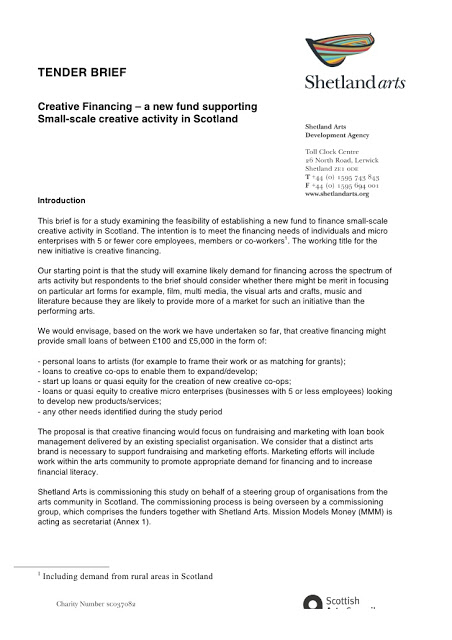
What is a brief/project brief?
A project brief is a set of guidelines that you must follow in order to submit the work. for example the BBC states you must create work that fits a following target audience of 16 - 32 year old
What is a commission/what does it mean to be commissioned?
being commissioned is being tasked in order to create a piece of media for either a company or people asking for people to create things for them. for either a budget or exposure from everyone.
What is meant by the term ‘tender’
A tender is the process in putting yourself up for hire to create a piece of media in exchange for money. A tender brief is when an company releases their brief to the public and allow anyone to follow it so instead of what commission does and have it so only one person or company can do it, in this case anyone can decide to do it and then send it to the company and allow to view them and pick the best one and use it.

How else could you respond to a brief?
A brief can be responded to if it's a competition or something among those lines in which you respond by sending in a specific piece.
READING A BRIEF
For our project we had to create a piece to enter into the E4 Ident competition. the guideline criteria specified that we had to create a piece that was up to 10 seconds in length that included specified music that E4 stated and provided and since we were given the music we selected the Jazz music for the comedic tone. There were many different soundtracks to choose from and they were provided to us by the college files.Finally, the E4 logo had to be in the animation, we were only allowed to use the logo in this video only. I used the logo at the end of my ESting.

NEGOTIATING A BRIEF
In this project we had flexibility of what we could create as long as it was suitable for audience. a stop motion animation, under 10 seconds and used specific music. but anything else the project included could be anything we wanted. we had to do very specific things, for example. In order to reach ten seconds, we had to take 120 pictures. In order to make it stop-motion.
 The E4 logo is copyrighted material which is allowed to be used in this competition only and is not allowed to be used on anything else, this also applies for the soundtrack that is designated (This can be seen on rule 8 above)

This is the copyright law that the logo/soundtrack falls upon.
In the media industry some companies may not want their ideas changed much so following a brief to the dot is essential.
In constraints you might face you could not have enough actors or budget. one particular problem that arose from our project was that since it was about a man falling from a building and was shown comical. some concerns were still raised that it may show suicidal themes. we also faced some issues with our budgeting but we managed to work around it by finding other uses for the materials used.
We did make some amendments to the final product. we made it slightly longer so it fit the 10 second brief criteria. we did that by extending the middle of the animation to run a bit longer. as well as make the content more interesting.
An example for a director who left a production was Guillermo del Toro on the Hobbit He left the production because the Co-funders of The Hobbit films, MGM, was going through heavily-reported financial issues at the time, and as such, as del Toro revealed in May 2010, the films had not been officially greenlit at that time. Furthermore, he added that the films wouldn't be until the MGM financial issues were resolved. Two days later, del Toro walked away from the director's chair, nearly two years after he took the job on.

OPPORTUNITIES
People respond to a brief to get work to do as well as experience in the media field. for example if i were to put a piece to a competition and won that competition i would receive a prize and have exposure to the media world.
For self development i discovered that animation is harder than it seems and that shooting them is very time consuming and I would not like to continue it
Becoming famous through competitions:
Le Cheval 2.1 by Stephen Scott-Hayward & Alex Kirkland was the winner of the Depict! competition, from then on Stephen Scott-Hayward went onto Hollywood to produce some much higher quality short films

For example, in the media industry, Actor Samuel L. Jackson and director and writer Quentin Tarantino have worked together for 20 years over 5 different films. Their first film they worked on together was Pulp Fiction, which is what Samuel L. Jackson is perhaps best known for.

I learnt how to animate and learnt how animation is animated in pairs, animating in pairs means that animation is held for 2 frames rather than films where films run at one frame. So animation overall runs at 12 unique frames per second whereas in films it's 24 unique frames.
What is a brief/project brief?
A project brief is a set of guidelines that you must follow in order to submit the work. for example the BBC states you must create work that fits a following target audience of 16 - 32 year old
What is a commission/what does it mean to be commissioned?
being commissioned is being tasked in order to create a piece of media for either a company or people asking for people to create things for them. for either a budget or exposure from everyone.
What is meant by the term ‘tender’
A tender is the process in putting yourself up for hire to create a piece of media in exchange for money. A tender brief is when an company releases their brief to the public and allow anyone to follow it so instead of what commission does and have it so only one person or company can do it, in this case anyone can decide to do it and then send it to the company and allow to view them and pick the best one and use it.
How else could you respond to a brief?
A brief can be responded to if it's a competition or something among those lines in which you respond by sending in a specific piece.
READING A BRIEF
For our project we had to create a piece to enter into the E4 Ident competition. the guideline criteria specified that we had to create a piece that was up to 10 seconds in length that included specified music that E4 stated and provided and since we were given the music we selected the Jazz music for the comedic tone. There were many different soundtracks to choose from and they were provided to us by the college files.Finally, the E4 logo had to be in the animation, we were only allowed to use the logo in this video only. I used the logo at the end of my ESting.

NEGOTIATING A BRIEF
In this project we had flexibility of what we could create as long as it was suitable for audience. a stop motion animation, under 10 seconds and used specific music. but anything else the project included could be anything we wanted. we had to do very specific things, for example. In order to reach ten seconds, we had to take 120 pictures. In order to make it stop-motion.


This is the copyright law that the logo/soundtrack falls upon.
In the media industry some companies may not want their ideas changed much so following a brief to the dot is essential.
In constraints you might face you could not have enough actors or budget. one particular problem that arose from our project was that since it was about a man falling from a building and was shown comical. some concerns were still raised that it may show suicidal themes. we also faced some issues with our budgeting but we managed to work around it by finding other uses for the materials used.
We did make some amendments to the final product. we made it slightly longer so it fit the 10 second brief criteria. we did that by extending the middle of the animation to run a bit longer. as well as make the content more interesting.
An example for a director who left a production was Guillermo del Toro on the Hobbit He left the production because the Co-funders of The Hobbit films, MGM, was going through heavily-reported financial issues at the time, and as such, as del Toro revealed in May 2010, the films had not been officially greenlit at that time. Furthermore, he added that the films wouldn't be until the MGM financial issues were resolved. Two days later, del Toro walked away from the director's chair, nearly two years after he took the job on.

OPPORTUNITIES
People respond to a brief to get work to do as well as experience in the media field. for example if i were to put a piece to a competition and won that competition i would receive a prize and have exposure to the media world.
For self development i discovered that animation is harder than it seems and that shooting them is very time consuming and I would not like to continue it
Becoming famous through competitions:
Le Cheval 2.1 by Stephen Scott-Hayward & Alex Kirkland was the winner of the Depict! competition, from then on Stephen Scott-Hayward went onto Hollywood to produce some much higher quality short films

For example, in the media industry, Actor Samuel L. Jackson and director and writer Quentin Tarantino have worked together for 20 years over 5 different films. Their first film they worked on together was Pulp Fiction, which is what Samuel L. Jackson is perhaps best known for.

I learnt how to animate and learnt how animation is animated in pairs, animating in pairs means that animation is held for 2 frames rather than films where films run at one frame. So animation overall runs at 12 unique frames per second whereas in films it's 24 unique frames.
Thursday, 4 January 2018
Esting evaluation
Step 1
Create your own user feedback survey
Step 2
Q 1 Age,Gender,Occupation: most of my respondents were students around the ages of 17-19 as well as having an even distribution of Male and female, with the ages it got responses from reflects the target audience we were going for.
 Q 2 Animation rating: the average number given was a 6.6/10 meaning it was quite average to the audiences. I think a reason for this is that it was short and the green screen at the beginning wasn't done well.
Q 3 Genre: the genre feedback for this Esting is that it is of a comedical style This was the intended purpose for the animation due to his comedical actions whilst falling so the audience was correct in genre

Q 4 Was the narrative clear?: The answers of this question were very equal of people understanding the narrative and not understanding. to me the narrative isn't too clear and that understandable like why would he be jumping? why would he be doing stupid stuff? is this man okay?
Q 5 Age: for this question the majority answers were that it was aimed at 10-12 years which isn't what our audience was planned to be it was planned to be for young adults.
 Q 6 Style of animation: Everyone responded to the questionnaire saying that this is a stop motion animation which is good because it is and that what the brief asked for.
Q 7 Character choice: the choice for character was well liked by the audience except for 2 responses one reporting we need an authoritative figure. The fact they enjoyed the character was good
Q 8 Animation smoothness: This question was met with responses that were Evenly halved. Personally i believe it didn't run very smooth as there were a lot of frames in which the character jumped forward great distances.
Q 9 Aesthetics: For the aesthetics the color choices were praised a fair bit as well as the ending where the character fell into the logo. On the comments about colors one answer said they liked how the color was consistent throughout the whole animation. I think the color scheme is basic and that gives it quite a comic tone with having bright colors.
Q 10 Creativity: For the creativity of the animation the falling was commented on a lot. I think that creating a entirely impossible action and something that could be viewed as quite dark into something comedical and entertaining as well as being possible to do.
Step 3:
In creating our animation we faced some financial difficulties by having to purchase wallpapers. as can be seen on the finance sheet so we solved this by receiving some funding from the college. as well as some safety issues when we filmed the first section on the roof we worked around this by stabilizing the tables and risk assessing before hand.
We were very efficient with our time, filming was completed in about two hours and editing was very quick. we had to re shoot as well due to the footage not being long enough but even then that was filmed quite quickly in about an hour.
The requirements of the brief were met as well as the requirements of the competitions (As can be seen below) . as we were tasked to create a stop motion animation that has a length of about 10 seconds and we managed to create that and these were all in the guidelines of the competition rules as well as using the competitions specified music if the music isn't used as they specified then it can't be submitted to the competition.

I obtained feedback from friends and family some of them responded positive but they mostly had constructive criticism especially concerning fluidity of animation and change of the characters clothing.
I feel from this animation task that it's much harder than it seems and sometimes ideas just don't work when you put them into action yet some do such as my animation Because it originally had a much shorter middle section however we created more ideas and made it longer but some ideas were cut from the final version. for example we were gonna have a second person but didn't due to time constraints.
I think i could quite easily work to all briefs given as long as they are written well because as i have just shown in this unit i am fully capable of doing so
I do not like shooting animation so continuing it in the future isn't really something i would want to do as i think it's quite boring and takes way too long to film for the things you create however claymation does slightly interest me
Create your own user feedback survey
Step 2
Q 1 Age,Gender,Occupation: most of my respondents were students around the ages of 17-19 as well as having an even distribution of Male and female, with the ages it got responses from reflects the target audience we were going for.
 Q 2 Animation rating: the average number given was a 6.6/10 meaning it was quite average to the audiences. I think a reason for this is that it was short and the green screen at the beginning wasn't done well.
Q 3 Genre: the genre feedback for this Esting is that it is of a comedical style This was the intended purpose for the animation due to his comedical actions whilst falling so the audience was correct in genre

Q 4 Was the narrative clear?: The answers of this question were very equal of people understanding the narrative and not understanding. to me the narrative isn't too clear and that understandable like why would he be jumping? why would he be doing stupid stuff? is this man okay?
Q 5 Age: for this question the majority answers were that it was aimed at 10-12 years which isn't what our audience was planned to be it was planned to be for young adults.
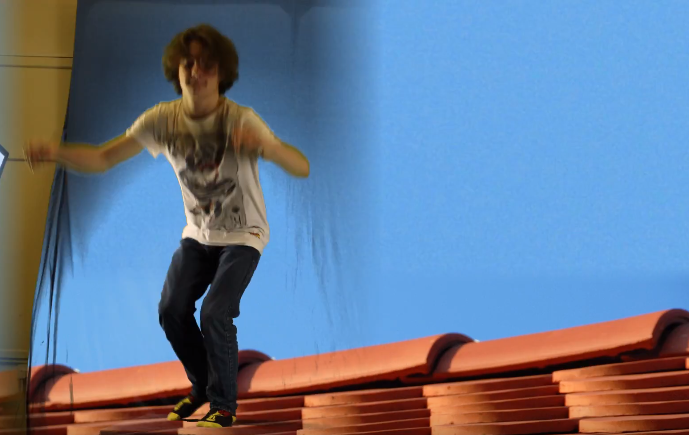
Q 7 Character choice: the choice for character was well liked by the audience except for 2 responses one reporting we need an authoritative figure. The fact they enjoyed the character was good
Q 8 Animation smoothness: This question was met with responses that were Evenly halved. Personally i believe it didn't run very smooth as there were a lot of frames in which the character jumped forward great distances.
Q 9 Aesthetics: For the aesthetics the color choices were praised a fair bit as well as the ending where the character fell into the logo. On the comments about colors one answer said they liked how the color was consistent throughout the whole animation. I think the color scheme is basic and that gives it quite a comic tone with having bright colors.
Q 10 Creativity: For the creativity of the animation the falling was commented on a lot. I think that creating a entirely impossible action and something that could be viewed as quite dark into something comedical and entertaining as well as being possible to do.
Step 3:
In creating our animation we faced some financial difficulties by having to purchase wallpapers. as can be seen on the finance sheet so we solved this by receiving some funding from the college. as well as some safety issues when we filmed the first section on the roof we worked around this by stabilizing the tables and risk assessing before hand.
We were very efficient with our time, filming was completed in about two hours and editing was very quick. we had to re shoot as well due to the footage not being long enough but even then that was filmed quite quickly in about an hour.
The requirements of the brief were met as well as the requirements of the competitions (As can be seen below) . as we were tasked to create a stop motion animation that has a length of about 10 seconds and we managed to create that and these were all in the guidelines of the competition rules as well as using the competitions specified music if the music isn't used as they specified then it can't be submitted to the competition.

I obtained feedback from friends and family some of them responded positive but they mostly had constructive criticism especially concerning fluidity of animation and change of the characters clothing.
I feel from this animation task that it's much harder than it seems and sometimes ideas just don't work when you put them into action yet some do such as my animation Because it originally had a much shorter middle section however we created more ideas and made it longer but some ideas were cut from the final version. for example we were gonna have a second person but didn't due to time constraints.
I think i could quite easily work to all briefs given as long as they are written well because as i have just shown in this unit i am fully capable of doing so
I do not like shooting animation so continuing it in the future isn't really something i would want to do as i think it's quite boring and takes way too long to film for the things you create however claymation does slightly interest me
Friday, 8 December 2017
Subscribe to:
Posts (Atom)